
Research Units
Since its foundation in 2013, the Department of Health Sciences (DSS) has distinguished itself as a research organization aimed at health protection, understood in its broadest sense as a "state of complete physical, mental, and social well-being and not merely the absence of disease." To this end, the DSS has established an organizational structure designed to facilitate interaction between basic and clinical research, as well as to promote interdisciplinary collaborations. Research activities are strictly based on principles of transparency, fairness, and appreciation of contributions, particularly from young researchers.
Thanks to this strategy and approach, the DSS has established various collaborations with private and public partners, including prestigious national and international universities and the two Florentine University Hospital Trusts, Careggi and Meyer - IRCCS, alongside which it promotes programs of excellence.
Research Units
ABiR

Prof. Daniela Massi (Anatomical Pathology Section, DSS - Scientific Director)
The ABiR Laboratory is located at the Polivalente Cubo 2 center (first floor, north wing, room 001/040), Viale Pieraccini 6, Florence.
The innovative instrumentation in the laboratory dedicated to multiparametric tissue analysis makes it possible to evaluate biomarker expression in tissues with maximum accuracy and precision, thereby obtaining qualitative and quantitative information on the distribution of tumor cells and their spatio-temporal interaction with immune system cells. Scientific research activities supported by funding from the Italian Association for Cancer Research (AIRC) special 5x1000 program for activities related to oncological pathology and in particular melanoma (Prof. Daniela Massi) and ERC funding (Prof. Pierangelo Geppetti) for activities related to the role of Schwann cells in chronic pain are carried out in ABiR.
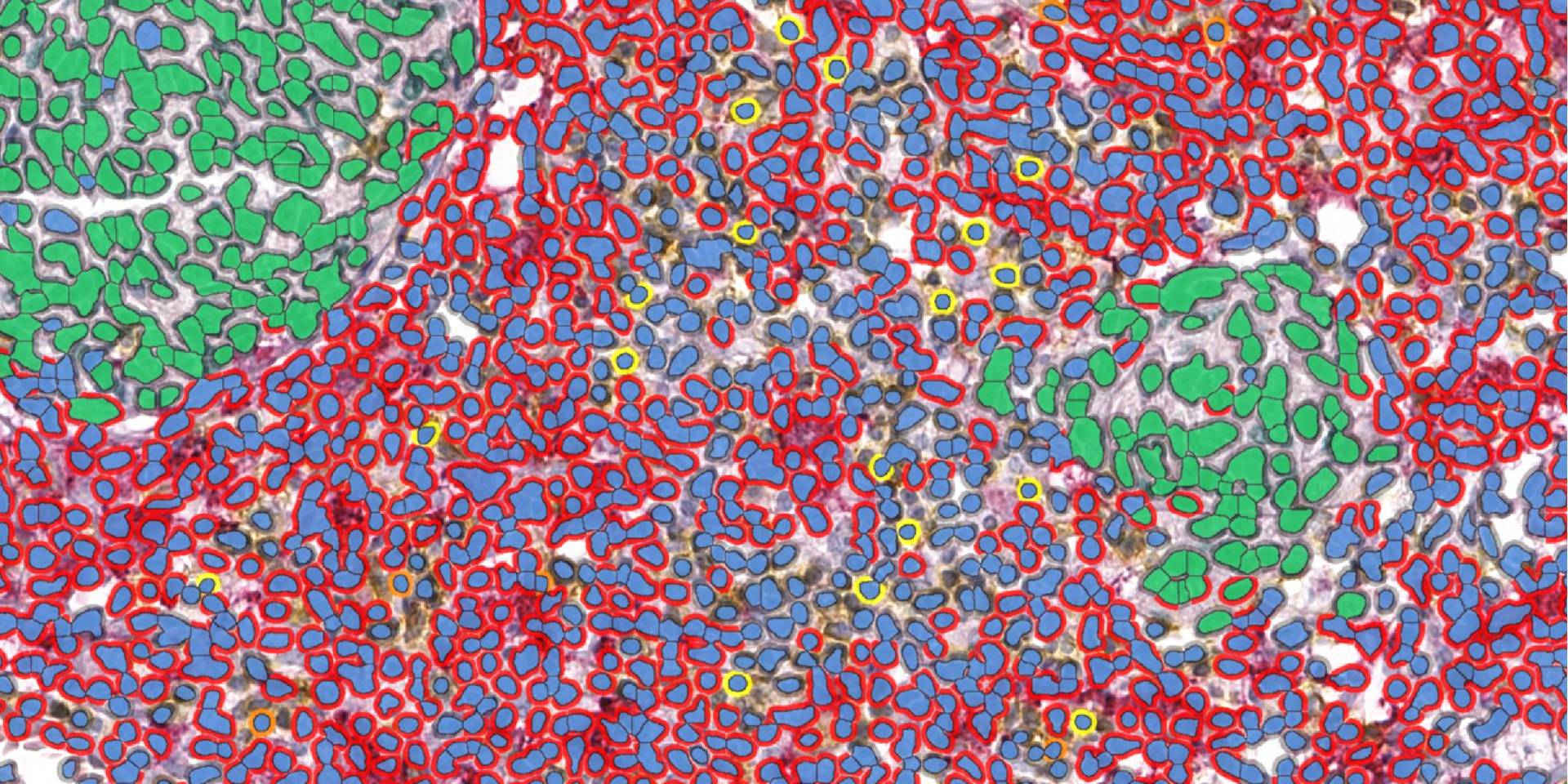
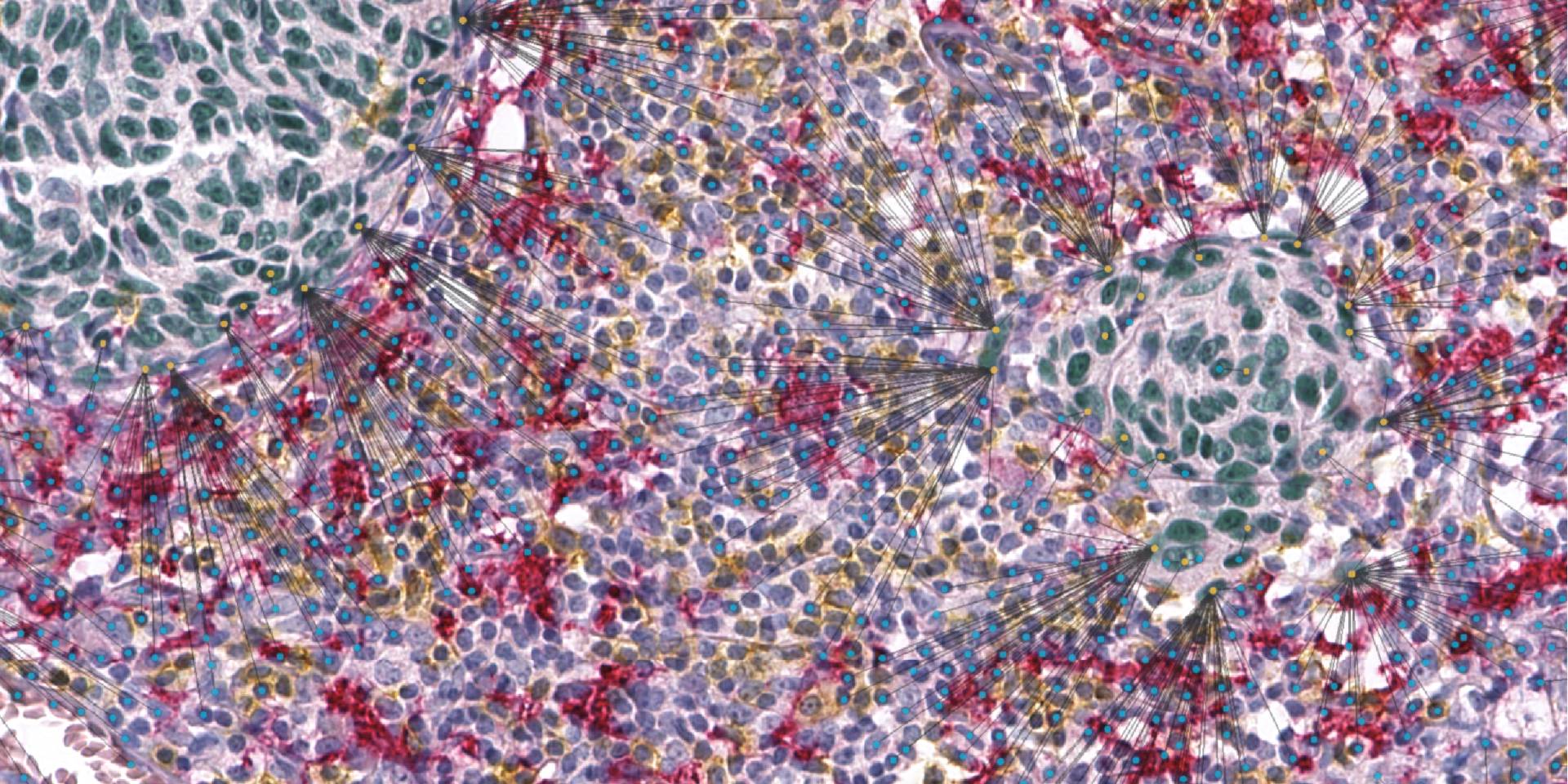
Equipment and instrumentation include:
- Histological sample preparation station, from sampling to paraffin embedding.
- Leica Microtome and Cryostat for sample sectioning and slide preparation.
- ROCHE Automated Immunostainer (Ventana Discovery Ultra), for automated slide staining with the ability to set protocols for Multiplex IHC in Bright Field, Fluorescence, and RNAscope.
- 3 Slide Scanners (Leica AT2, Leica CS2, and Menarini D-Sight) for creating digital slides (up to 400 per day) (Whole Slide Imaging).
- Zeiss Axio Imager 2 Microscope equipped with Apotome2 (structured illumination) enabling z-stack acquisition with high image quality and no noise, featuring an 8-slide stage capable of high-magnification scanning, including fluorescence with up to 9 fluorophores.
- HALO software (Indica Labs) for advanced image analysis on digital scans, capable of cell counting while distinguishing up to 5 markers and determining relative distances between cells.
- IMARIS software for 3D reconstruction of z-stack fluorescence acquisitions.
- HALO Link sharing platform (Indica Labs), seamlessly integrated with image analysis modules, capable of supporting digital slide scans from any digital scanner with sharing options via Browser Link.
- HALO AI (Indica Labs), a Deep Learning-based artificial intelligence module capable of creating neural networks to identify tissue regions following training. The image analysis workstation is equipped with high-performance processing graphics cards.
- Tissue microarray (Alphelys), with array design software Version 1.1
Research Groups
insert brief caption on activities
INNET-PSY
Coordinator
Prof. Fiammetta Cosci, Associate Professor in Clinical Psychology, University of Florence, Florence, Italy
Members
- Carmen Berrocal, Full Professor in Clinical Psychology, University of Pisa, Pisa, Italy
- Danilo Carrozzino, Associate Professor in Clinical Psychology, University of Bologna, Bologna, Italy
- Kaj Sparle Christensen, Professor in General Medicine, Aarhus University, Aarhus, Denmark
- Marcelo Fleck, Full Professor in Psychiatry, Universidade Federal do Rio Grande do Sul, Porto Alegre, Brazil
- Agnieszka Woźniewicz-Grzymała, Assistant Professor in Clinical Psychology, Nicolaus Copernicus University, Torun, Poland
- Yonggui Yuan, Associate Professor in Clinical Psychiatry and Psychosomatics, Southeast University, Nanjing, China
- Yuqun Zhang, Associate Professor in Psychology, Nanjing University of Traditional Chinese Medicine, Nanjing, China
- Stephan Zipfel, Full Professor of Psychosomatic Medicine and Psychotherapy, University of Tubingen, Germany
Aims and Vision
PAN.NET
Coordinator
Prof. Fiammetta Cosci, Associate Professor in Clinical Psychology, University of Florence, Florence, Italy
Members
- Daniela Caldirola, Assistant Professor, Humanitas University, Italy
-
Pablo Dutra, Psychiatrist, Federal University of Rio de Janeiro, Rio de Janeiro, Brazil
Panic & Respiration Lab. Federal University of Rio de Janeiro https://www.labpr.com.br/ - Liesbet Goossens, Assistant Professor in Psychiatry, Maastricht University, Maastricht, The Netherlands
- Nicole Leibold, Assistant Professor in Psychiatry, Maastricht University, Maastricht, The Netherlands
- Giampaolo Perna, Full Professor in Psychiatry, Humanitas University, Italy
- Laiana A. Quagliato, Associate Professor in Psychiatry, Federal University of Rio de Janeiro, Rio de Janeiro, Brazil
- Antonio Egidio Nardi, Full Professor in Psychiatry, Universidade Federal do Rio de Janeiro, Rio de Janeiro, Brazil
- Koen Schruers, Full Professor in Psychiatry, Maastricht University, Maastricht, The Netherlands
Aims and Vision
Discontinuing Psychiatric Drugs
GRP
Last update
31.07.2026